Lost in the Mist: How Sapa Stole My Heart Without Saying a Word
Have you ever stepped into a place that felt alive—where the mountains breathe, the terraces whisper, and every smile tells a story? That’s Sapa, Vietnam. Nestled in the northern highlands, this misty dream isn’t just about views—it’s about connection. I went for the scenery but stayed for the people, the rhythms of village life, and the quiet magic of culture lived deeply, day by day. Sapa does not shout; it hums. And if you listen closely, you’ll hear not only the wind through the rice fields but also the gentle pulse of a way of life that has endured for generations, shaped by land, labor, and legacy.
First Glimpse: Arriving in Sapa Under the Clouds
The journey to Sapa begins long before the town appears. Most travelers arrive after an overnight train or bus from Hanoi, trading the city’s clamor for the hush of highland roads. As the bus climbs through the Fansipan range, the urban sprawl gives way to emerald hills, cascading streams, and limestone cliffs veiled in mist. By the time dawn breaks over Muong Hoa Valley, the first breath of mountain air greets you—crisp, clean, and tinged with the earthy scent of moss and pine. The coolness clings to wool scarves and jacket collars, a welcome relief from lowland humidity.
Arriving in Sapa at sunrise or twilight enhances the sense of stepping into another world. At these quiet hours, fog drapes the rooftops like gauze, softening outlines and muffling sound. The streets, often bustling by midday, are still. A few early vendors arrange baskets of sweet potatoes and corn, their breath visible in the morning chill. This is when Sapa feels most alive—not in motion, but in stillness. The contrast between city life and mountain rhythm is immediate and profound. The pace slows. Thoughts clear. Even time seems to stretch.
Travelers have several options for reaching Sapa. The most common is an overnight sleeper bus from Hanoi, which takes about six to seven hours. While economical, the winding roads can be challenging for those prone to motion sickness. A more comfortable alternative is a private car or shuttle service, offering greater flexibility and rest stops. For those seeking a scenic journey, the train to Lao Cai followed by a short transfer is increasingly popular. Regardless of the route, the arrival in Sapa’s town center is marked by a shift in atmosphere—fewer horns, fewer lights, and a quiet that invites reflection.
The town itself is modest: a cluster of guesthouses, small cafes, and market stalls nestled between steep slopes. Stone paths wind uphill, leading to viewpoints and trailheads. There is no airport, no highways—only the mountain and the people who live within its folds. This remoteness is part of Sapa’s charm. It is not easily reached, and that difficulty preserves its authenticity. Visitors arrive not by accident, but by intention. And from the moment they step off the bus, they are no longer tourists passing through—they are guests in a place that asks for presence, not just observation.
Beyond the Postcard: The Real Rhythm of Highland Life
Sapa’s beauty is often captured in photographs: golden terraces under morning light, children in colorful embroidery walking to school, elders smiling beneath wide-brimmed hats. But behind these images lies a deeper truth—the daily life of communities who have lived in these mountains for centuries. The Hmong, Red Dao, and Tay ethnic groups are not performers for the camera; they are families tending crops, raising children, and preserving traditions that shape their identity. To understand Sapa, one must look beyond the postcard and step into the rhythm of highland life.
Mornings in the villages begin early. Before the sun clears the peaks, women carry baskets to the fields, their indigo-dyed skirts brushing against damp grass. Children, bundled in handmade jackets, walk narrow paths to school, their laughter echoing through the valley. Elders sit outside wooden homes, carving bamboo or sorting herbs, their hands weathered by years of work. Chickens peck at the ground, pigs root in pens, and smoke curls from stoves where breakfast is being prepared. This is not a staged scene—it is ordinary life, rich in routine and meaning.
Tourism has brought change, but not always disruption. Many families welcome visitors, not only for the income but for the exchange of stories and smiles. Yet the balance between hospitality and privacy is delicate. Some travelers, eager for the perfect photo, approach villagers without permission, turning people into props. This is where respect becomes essential. A simple gesture—pausing, smiling, asking with hands if a picture is okay—can transform an interaction from intrusion to connection.
The value of slowing down cannot be overstated. Instead of rushing from one village to the next, consider spending time in one place. Sit with a family as they prepare food. Watch a grandmother teach her granddaughter to weave. These moments do not fit neatly into a camera frame, but they linger in memory. They reveal a truth that no brochure can capture: that culture is not something to be seen, but something to be felt. In Sapa, authenticity is not found in performance, but in presence—in the quiet dignity of daily life lived with purpose and pride.
Walking the Terraces: A Path Through Time and Soil
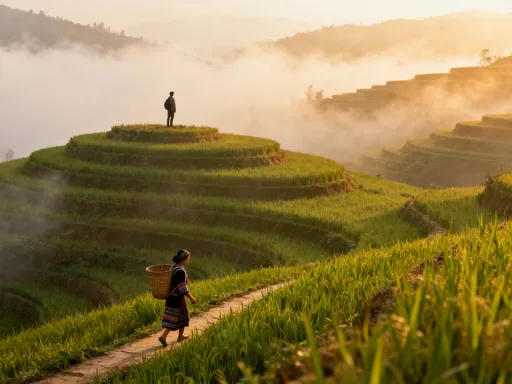
The rice terraces of Sapa are among the most iconic landscapes in Southeast Asia, but they are far more than scenic backdrops. Carved into the mountains over centuries by generations of farmers, these stepped fields are a testament to human resilience and harmony with nature. Each terrace is shaped by hand, maintained with care, and flooded with water that reflects the sky like a mirror. To walk among them is to trace the footsteps of ancestors, to feel the weight of tradition in every curve of the land.
The agricultural cycle governs life in the highlands. In spring, fields are flooded and plowed by water buffalo, their hooves sinking into soft mud. By summer, young rice shoots turn the slopes into a sea of green. In autumn, the terraces glow gold, ready for harvest. Each stage requires precise timing and collective effort. Families rise before dawn during planting and harvesting seasons, working side by side to ensure enough food for the year. This deep connection between people and land is not romanticized—it is real, demanding, and essential.
For visitors, hiking through the terraces offers both physical challenge and emotional reward. Trails like the route from Cat Cat to Y Linh Ho or Ta Van to Lao Chai allow immersion in village life while showcasing breathtaking views. The Cat Cat to Y Linh Ho path is moderate in difficulty, winding through forests and across wooden bridges, with opportunities to see waterfalls and small farms. The Ta Van to Lao Chai trail is longer and more strenuous, passing through Tay and Hmong villages where children wave and dogs bark from doorways. Both routes offer chances to rest, reflect, and engage with locals along the way.
Preparation is key. Sturdy hiking shoes with good grip are essential, as paths can be slippery, especially after rain. A light backpack with water, snacks, and a rain jacket ensures comfort. Hiring a local guide is highly recommended—not only for navigation, but for cultural insight. Guides often speak multiple languages and can share stories about farming practices, family histories, and village customs. They also help facilitate respectful interactions, ensuring visitors do not trespass on private land or disrupt daily routines.
Weather plays a significant role in the experience. Mornings often bring mist, which can lift by midday to reveal clear skies. Rain is common, particularly in spring and summer, so flexibility is important. Yet even in fog, the terraces hold a quiet beauty—the muffled sounds, the softened colors, the sense of being wrapped in cloud. Walking these paths is not about conquering distance, but about deepening appreciation. Each step becomes a meditation on time, labor, and the quiet dignity of those who shape the land with their hands.
Threads of Identity: Textiles and the Art of Handmade Stories
In Sapa, clothing is more than fabric—it is language. The intricate embroidery, bold patterns, and deep indigo hues worn by the Hmong, Red Dao, and Tay women are not merely decorative; they carry stories of ancestry, nature, and spiritual belief. A single piece of textile can take weeks or even months to complete, stitched by hand using techniques passed down through generations. To see these garments is to witness a living archive of culture, where every thread holds meaning.
The process begins with natural materials. Cotton is grown, spun, and woven on wooden looms. Indigo dye is made from fermented leaves, producing a rich blue that darkens with each dip. Embroidery threads are carefully selected, often in red, pink, green, and yellow, forming geometric shapes, flowers, or animals. Patterns vary by village and ethnic group—some depict dragons, others mountains or rivers. For the Hmong, certain motifs are believed to protect the wearer or guide souls. For the Red Dao, red headdresses symbolize health and vitality. These details are not random; they are coded messages, woven into daily life.
Visitors can observe this artistry in family-run workshops or cooperatives, where women work under open eaves, their fingers moving swiftly through fabric. Some centers welcome guests to watch demonstrations or even try basic stitching. These spaces are not tourist traps—they are livelihoods. By purchasing textiles directly from artisans, travelers support sustainable income and help preserve a fragile tradition. It is important, however, to do so ethically. Bargaining aggressively undermines the value of the work. Instead, ask about the story behind a piece, learn the name of the maker, and pay fairly. This transforms a simple transaction into a meaningful exchange.
Textiles also play a role in rites of passage. Girls begin learning to sew as young as six or seven. By adolescence, they are expected to create their own wedding dress—a garment so elaborate it may take years to finish. These dresses are worn only once, then preserved as family heirlooms. In a world of fast fashion, such dedication is rare. It speaks to a worldview in which beauty is earned through patience, and identity is stitched, not bought.
Supporting textile preservation is not just about buying souvenirs. It is about recognizing that culture is not static. As younger generations move to cities or adopt modern clothing, traditional dress risks fading. Yet there is hope. Some schools now teach weaving and embroidery. Local cooperatives collaborate with designers to create contemporary pieces that honor tradition. When visitors choose to engage with these efforts, they become part of a larger story—one of resilience, adaptation, and pride.
Around the Fire: Sharing Meals and Moments in a Homestay
One of the most transformative experiences in Sapa is staying in a traditional homestay. Unlike hotels in town, these accommodations are family homes, often built from bamboo and wood, perched on hillsides with panoramic views. Guests sleep on simple mattresses, share communal spaces, and eat meals prepared with ingredients grown or raised on-site. It is not luxury in the conventional sense, but it offers something deeper: intimacy.
Evenings in a homestay are especially memorable. As dusk falls, the family gathers around a central stove, where a pot simmers with corn, pork, and wild mountain herbs. The air fills with the scent of roasted meat and steamed rice. Meals are served on low tables, eaten with chopsticks and spoons, often accompanied by warm rice wine. Conversation flows in broken English, gestures, and laughter. Children peek from doorways, then join in, teaching visitors simple games or drawing pictures together.
A typical menu might include grilled pork with lemongrass, stir-fried vegetables, fermented bamboo shoots, and sticky rice cooked in bamboo tubes. Dishes are flavorful but not spicy, designed to sustain energy for farming. Water is boiled before drinking, and tea is served throughout the day. The cooking methods are traditional—open flames, clay pots, bamboo steamers—connecting food to fire, earth, and season.
Staying with a local family transforms understanding. It breaks down the barrier between visitor and resident. You see how a mother manages her household, how a father repairs tools, how grandparents care for grandchildren. You learn that hospitality here is not a service, but a way of life. Offering food, shelter, and warmth is not optional—it is duty, born of community values.
Choosing a responsible homestay matters. Look for programs affiliated with local cooperatives or community-based tourism initiatives. These ensure that income stays within the village and supports education, healthcare, or infrastructure. Avoid operators that exploit families for profit or turn homes into staged performances. A good homestay feels authentic—not polished, but genuine. It may lack modern comforts, but it offers something more valuable: connection.
Voices of the Mountains: Music, Language, and Unspoken Connection
The culture of Sapa is not only seen but heard. At dusk, the sound of a bamboo flute drifts through the valley. Children sing folk songs in dialects that have no written form. Elders recite oral histories, passing down myths and proverbs. These voices are fragile. With younger generations speaking Vietnamese in schools and cities, many indigenous languages are at risk of disappearing. Yet in quiet moments, the mountain still sings.
Music is woven into daily life. The Hmong play the *khen*, a free-reed mouth organ, during festivals and courting rituals. The Red Dao use flutes and drums in healing ceremonies. These sounds are not performed for tourists—they are part of spiritual and social practice. When visitors hear them, it is often by invitation, a sign of trust.
Language, too, carries deep meaning. While many adults speak some Vietnamese, elders often communicate in their native tongues. A child might know only a few phrases of her grandmother’s language, a sign of cultural erosion. Efforts are underway to document and teach these dialects, but time is short. Travelers can contribute simply by listening—by asking elders to share a song, a phrase, a story. Even without translation, the emotion is clear.
Some of the most powerful moments in Sapa happen without words. A grandmother hands you a cup of tea. A child draws a flower and gives it to you. A farmer shares a piece of fruit after a long hike. These gestures transcend language. They are acts of kindness, recognition, and shared humanity. In a world that often feels fragmented, such moments remind us that connection is possible—not through speech, but through presence, attention, and respect.
Leaving Lightly: Traveling with Respect and Meaning
To visit Sapa is a privilege, not a right. The mountains, the people, the culture—they do not exist for our consumption. Responsible tourism means recognizing that we are guests in a living community, not spectators in a museum. It means dressing modestly, especially in villages, avoiding shorts and sleeveless tops out of respect for local customs. It means asking before taking photographs, particularly of children and elders. A simple hand gesture—palm up, fingers together—can convey your request. If the answer is no, accept it with grace.
Supporting the local economy is one of the most meaningful ways to give back. Buy food from market stalls, hire local guides, purchase crafts directly from artisans. Avoid souvenir shops in town that sell mass-produced items imported from elsewhere. Choose experiences that benefit communities, such as homestays, cooking classes, or farm visits. These activities ensure that tourism income reaches those who need it most.
Be cautious of exploitative practices. Some operators offer “photo tours” that pay villagers to dress in traditional clothes and pose on demand. While this may seem harmless, it reduces culture to performance and can create dependency. Similarly, avoid staged shows that lack authenticity. True cultural exchange happens in real life, not on a stage.
Finally, consider the length of your stay. A day trip from Sapa town offers views but little understanding. Staying two or three nights in a village allows deeper connection. You begin to recognize faces, learn names, notice routines. You see how weather affects farming, how families adapt to change, how joy and hardship coexist. This is where transformation happens—not in grand sights, but in quiet moments of shared existence.
Sapa does not change you with spectacle. It changes you with stillness. With the sound of a child’s laugh. With the weight of a handwoven textile. With the taste of a meal shared in silence. It teaches humility, presence, and gratitude. And when you leave, you carry not just photographs, but a quiet knowing: that some places speak without words, and their voices stay with you long after you’ve gone.